Post-Operative Tips After Surgical Facelift
Home Patient Guide Post-Operative Tips After Surgical Facelift
Post-Operative Tips After Surgical Facelift
The post-operative recovery period is a critical stage in achieving the best possible aesthetic outcome. Adhering closely to your surgeon’s instructions accelerates healing, minimizes swelling, and allows the final contours to emerge clearly.
Share this page:
If you are considering a facelift and seeking a clear, reliable guide to post-operative recovery, you are in the right place. The success of the procedure depends not only on the surgeon's technical skill, but significantly on your commitment to aftercare instructions during recovery.
Dr. Tarek Zahra, Consultant Plastic Surgeon, is considered one of the leading facelift specialists in the UAE, thanks to his extensive experience in deep-plane facelift surgery and advanced facial rejuvenation techniques that deliver precise, natural-looking results.In this article, you will learn about the most essential post-operative guidelines to accelerate recovery, safeguard your health, and maintain results that last for years to come.
An Overview of Facelift Surgery:
A surgical facelift is an aesthetic procedure designed to restore facial youthfulness by tightening the underlying deep muscular layer (the SMAS), excising redundant tissue, defining the jawline and neck, and smoothing aging-related folds.
The procedure is usually performed under general anesthesia, and its success depends on the precision of the technique used and the surgeon’s experience. Dr. Tarek Zahra employs advanced deep plane lifting techniques that produce natural, balanced outcomes without an artificial or over-tightened look, fully preserving authentic facial expressions and personal identity.
A surgical facelift is well-suited for individuals experiencing:
• Noticeable sagging in the mid and lower face.
• Signs of aging around the jawline and neck.
• Laxity in facial muscles.
• Significant weight loss that has affected skin firmness.
It remains the most definitive and long-lasting intervention for restoring a youthful facial appearance for many years compared with non-surgical solutions.
Types of Facelift Procedures
The techniques used in facelift surgery vary according to each patient’s condition and degree of sagging. Specialized approaches performed by Dr. Tarek Zahra include:
1. 5D Deep-Plane Facelift:
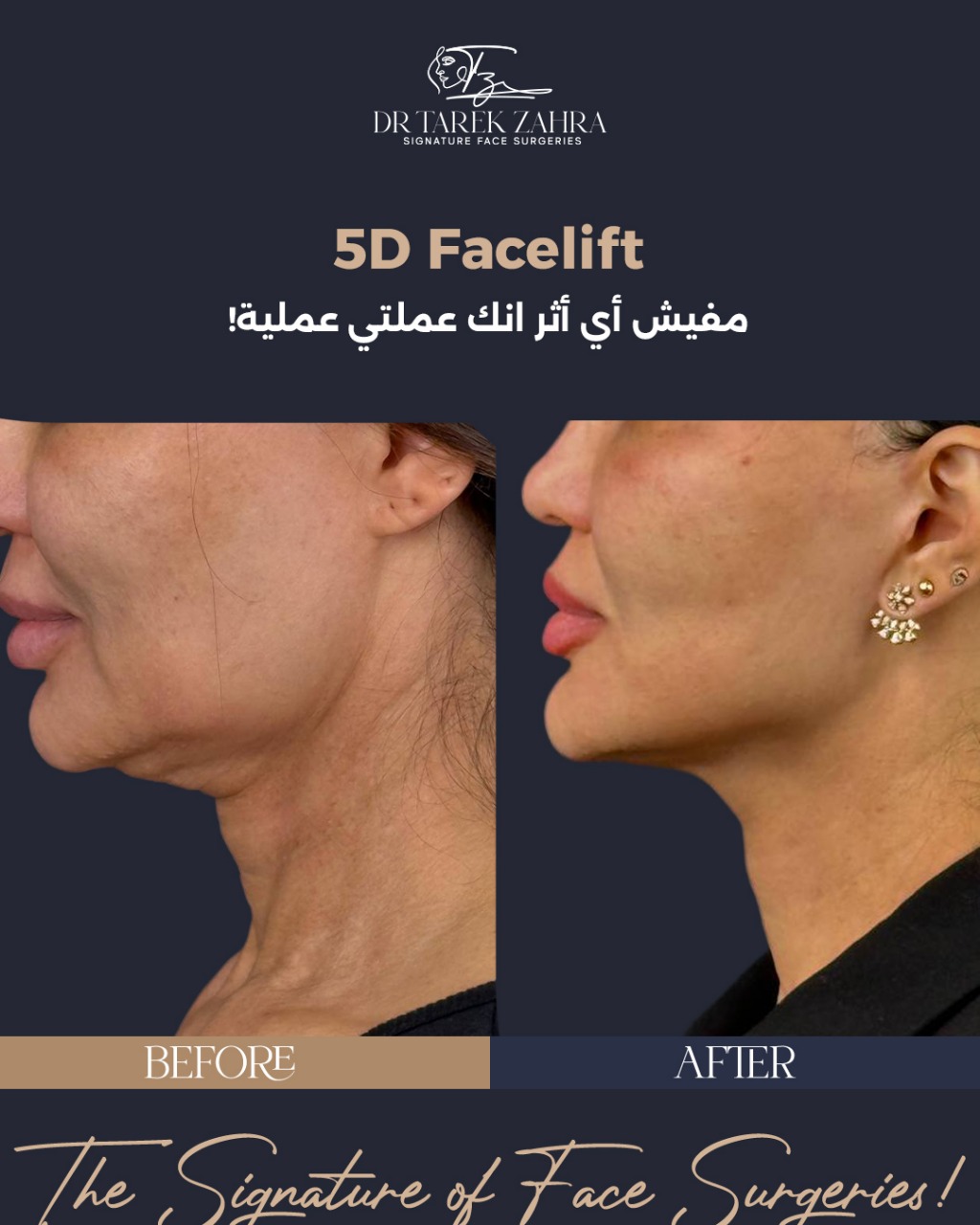
The 5D Facelift is considered one of the latest surgical facelift techniques. It focuses on repositioning the deeper layers of muscles and tissues rather than simply tightening the skin.
This technique is suitable for both men and women experiencing significant sagging or volume loss in the mid and lower face. It requires the expertise of an experienced surgeon such as Dr. Tarek Zahra, Consultant Plastic Surgeon, to achieve balanced and natural-looking results.
Benefits of the 5D Deep-Plane Facelift:
• Provides very natural facial contouring without a tight or artificial appearance.
• Addresses deep sagging in the midface, cheeks, jawline, and neck.
• Improves facial volume and the smoothness of facial contours while restoring structural support to the tissues.
• Provides long-lasting results compared with traditional techniques.

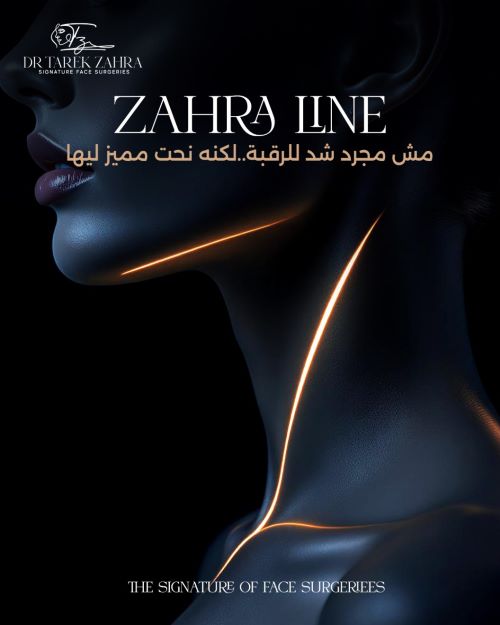
2. Neck and Jawline Sculpting (Zahra Line):
The Zahra Line technique is a precise procedure designed to define the jawline and neck, particularly for people experiencing early signs of sagging or mild excess fat in this area. This technique is ideal for those seeking a sharp and elegant jawline without an exaggerated appearance.
Benefits of Zahra Line technique:
• Provides a more defined and youthful jawline.
• Addresses neck laxity and removes excess fat when present.
• Frequently integrated with a facelift to establish continuous harmony between the face and neck.
• Relies on tightening the SMAS layers and supporting the natural facial ligaments.
3. Endoscopic Facelift with Hidden Incisions:
This advanced technique uses an endoscope to perform the facelift through very small incisions, usually hidden behind the hairline or ear. Dr. Tarek Zahra uses a high-definition camera to access and elevate target structures with minimal surgical trauma, resulting in a natural appearance with barely noticeable scars.
Benefits of an Endoscopic Facelift:
• Small, barely visible incisions.
• Highly effective for addressing sagging in the forehead, midface, and cheeks.
• Faster recovery compared with traditional facelift surgery.
• Suitable for moderate sagging in patients in their 40s and 50s.
4. Mini Facelift:
A mini facelift is ideal for mild to moderate sagging, particularly in the lower third of the face. It is an excellent option for people who do not require a deep facelift or who want to delay undergoing a full facelift in the future.
Benefits of a Mini Facelift:
• Shorter surgical time, typically one to two hours.
• Faster recovery compared with a full facelift.
• Mild tightening of the skin and tissues without significantly changing the facial features.
• Best suited for candidates aged 35 to 50 seeking subtle, natural-looking results.

Postoperative Tips After Surgical Facelift Surgery
1. Wear the Compression Garment:
Wear the prescribed compression garment continuously for 7 to 14 days as directed by your surgeon. The garment plays an essential role in controlling post-surgical edema, stabilizing tissues in their new positions, and supporting structural healing.
2. Maintain Proper Sleeping Position:
Sleep on your back with your head elevated at a 30 to 45-degree angle using two or three pillows. Avoid sleeping on your side or stomach for at least two weeks to eliminate friction and pressure on incision sites.
3. Apply Cold Compresses for Swelling:
During the first 48 hours, apply cold packs gently around the treated areas (avoiding direct contact with incisions) to reduce localized bruising and swelling. Never apply ice directly on the surgical areas.
4. Care for Incision Sites:
• Keep the incisions clean and dry.
• Apply only physician-prescribed antibiotic ointments or topical solutions as directed.
• Avoid exposing incisions to direct water or moisture during the initial days until your doctor has given you permission.
5. Avoid Strenuous Activities:
Avoid exercise, lifting heavy objects, and excessive bending for 3–4 weeks to prevent elevations in blood pressure that could induce bleeding or prolonged swelling. Light activities such as walking are generally permitted after a few days.
6. Avoid Smoking and Alcohol:
Smoking delays wound healing and increases the risk of complications. Therefore, it is preferable to avoid smoking and alcohol for two weeks before and after surgery.
7. Avoid Direct Sun Exposure:
Avoid direct sun exposure during the first few weeks to prevent discoloration along incision lines. Once the wounds have healed, use a high-SPF sunscreen as recommended.
8. Take Prescribed Medications:
Follow the prescribed anti-inflammatory medications, antibiotics, and painkillers as directed. Avoid over-the-counter blood thinners (such as aspirin or ibuprofen) unless approved by your doctor.
9. Attend Regular Follow-Up Appointments:
Attend all scheduled post-operative appointments for suture removal, wound inspection, and professional assessment of your healing progression.
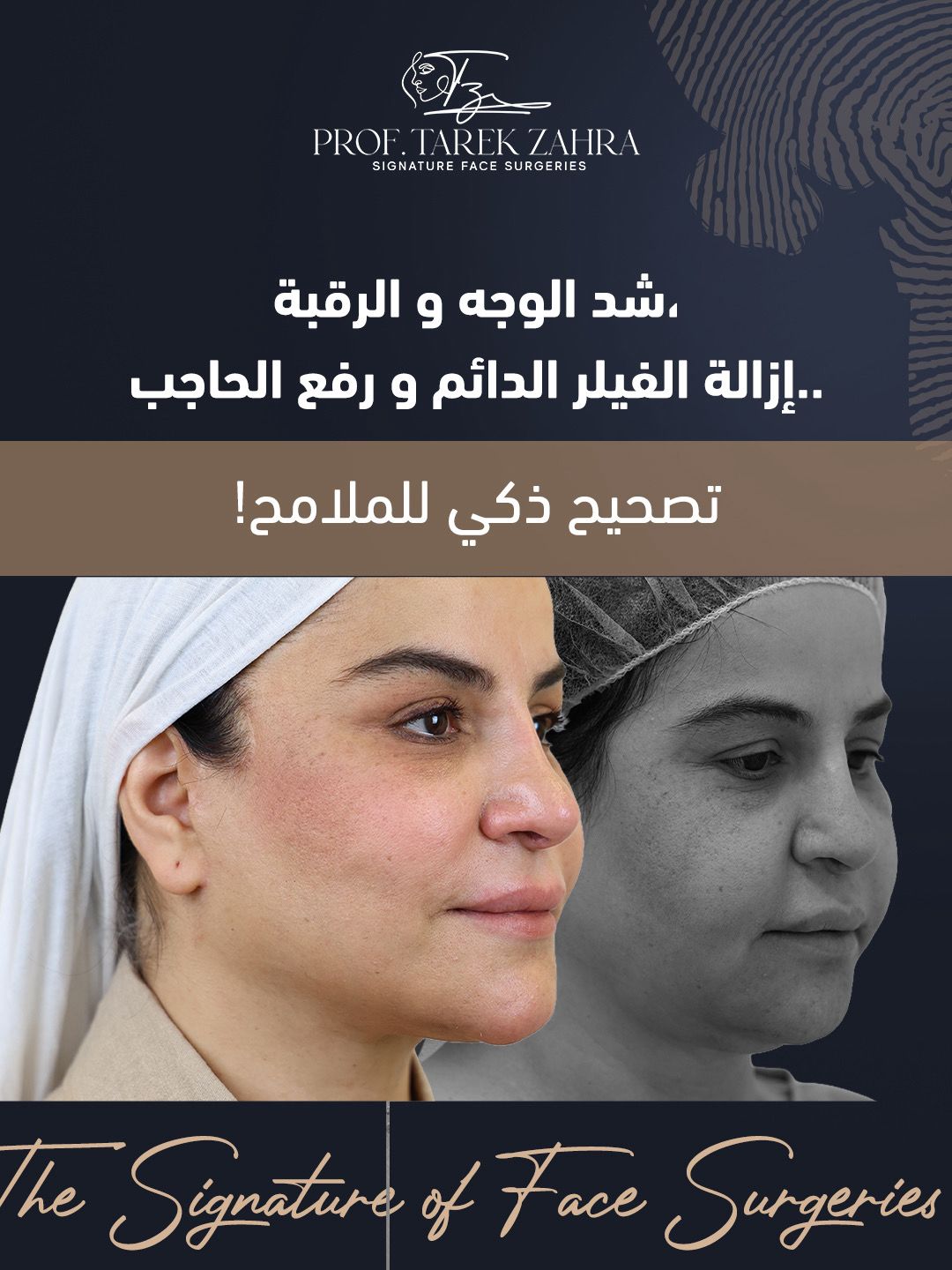
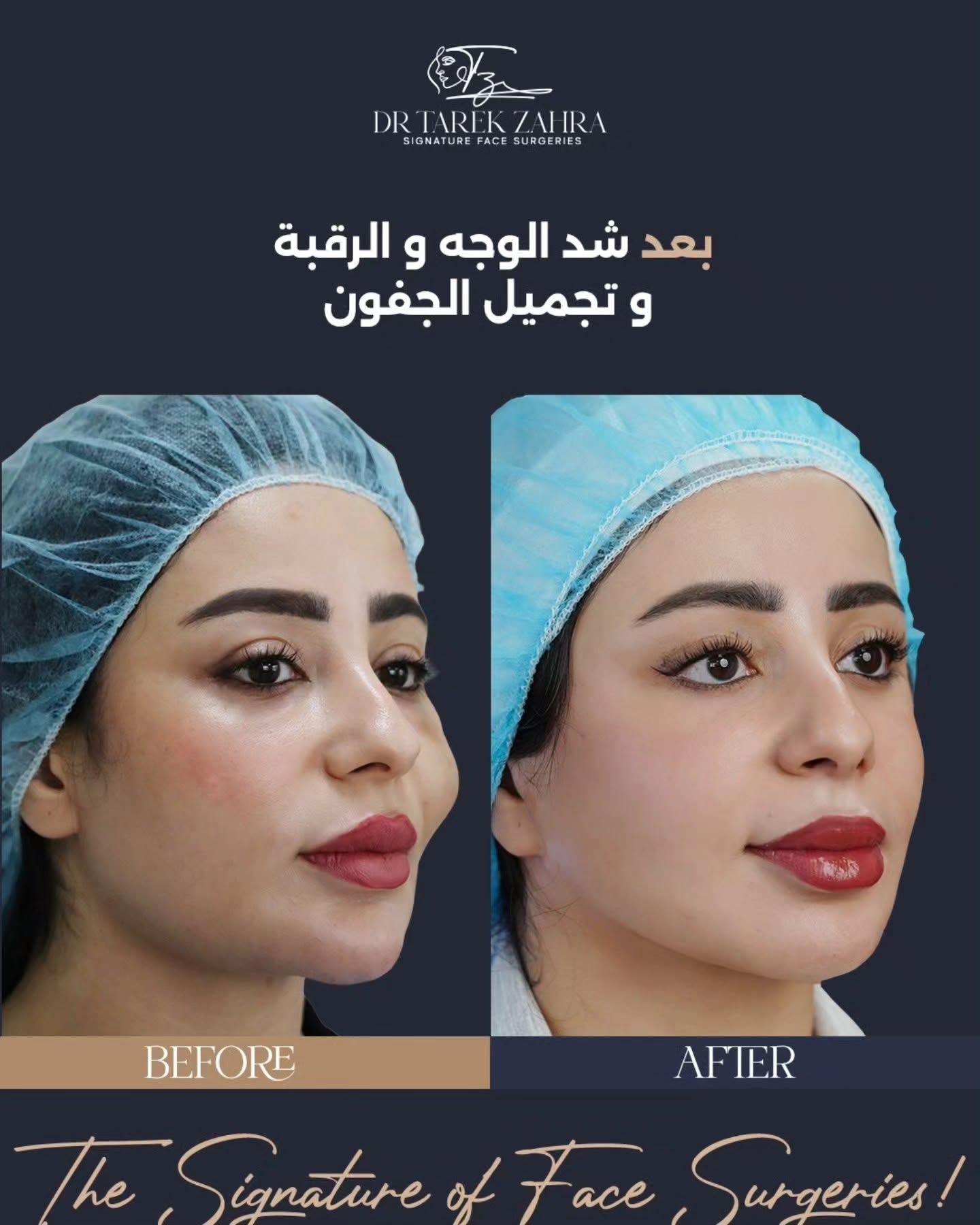
Results of Facelift Surgery with Dr. Tarek Zahra
Patient Reviews of Dr. Tarek Zahra as a Facelift Surgeon
In Conclusion
The post-operative recovery phase following a surgical facelift is an essential step to achieving the best possible outcome. Following your surgeon's instructions accelerates healing, reduces swelling, and allows the final results to emerge clearly.
With modern facelift techniques and advances in postoperative care, outcomes are more natural, stable, and predictable than ever. Choosing an experienced surgeon, such as Dr. Tarek Zahra, Consultant Plastic Surgeon, remains one of the most critical factors in ensuring a safe surgical experience and balanced results that harmonize with your authentic facial features.
When Does the Face Return to Normal After a Facelift?
Initial healing becomes apparent within 3 to 4 weeks, during which the majority of acute swelling and bruising subsides, allowing refined facial contours to show. Final results fully stabilize at around 3 months, once internal tissues have healed and normal sensation is restored.
How Many Days Should I Wear the Compression Garment After a Facelift?
The compression garment plays an important role in reducing swelling and supporting the tissues in their new position. It is generally recommended to wear it continuously for 7–14 days, after which your surgeon may advise wearing it only at night for an additional week.
When Can I Shower After a Facelift?
You can generally take a body shower 48 to 72 hours after surgery, ensuring that water does not make direct contact with incisions or the surgical dressing. Gentle hair washing with lukewarm water and mild shampoo is typically permitted after 3 to 5 days, depending on your surgeon’s instructions.